
Most people read an annual report to find out whether a company made a profit. Investors read it for a completely different reason. They want to understand how the business generates value, whether that value is sustainable, and what risks could affect future performance.
An annual report is one of the most important sources of information available to shareholders, analysts, lenders, and potential investors. It combines financial data with management commentary, business strategy, governance disclosures, and risk assessments. When read correctly, it provides a comprehensive picture of a company's operational efficiency, financial stability, and long-term growth potential.
The challenge is that the annual report of any company often exceeds hundreds of pages, making it difficult to distinguish between important information and supporting disclosures.
This blog guides how to focus your attention and how to interpret the information from an investor's perspective.
5 Things To Focus on When Reading an Annual Report
Start with Management's View of the Business
Before diving into financial statements, spend time reading the Chairman's Message and Management Discussion & Analysis (MD&A). These sections help you understand how leadership views the company's performance, what challenges it faced, and where it expects future growth to come from.
Analyze the Financial Statements Beyond Profit Figures
The Income Statement, Balance Sheet, and Cash Flow Statement are the foundation of every annual report. However, you should avoid focusing only on profit numbers. Instead, examine whether revenue growth is supported by healthy margins, manageable debt levels, and strong cash generation.
When reviewing the annual report of any company, one of the most important questions to ask is whether the business is generating cash from its core operations.
Look for Trends Rather Than Isolated Numbers
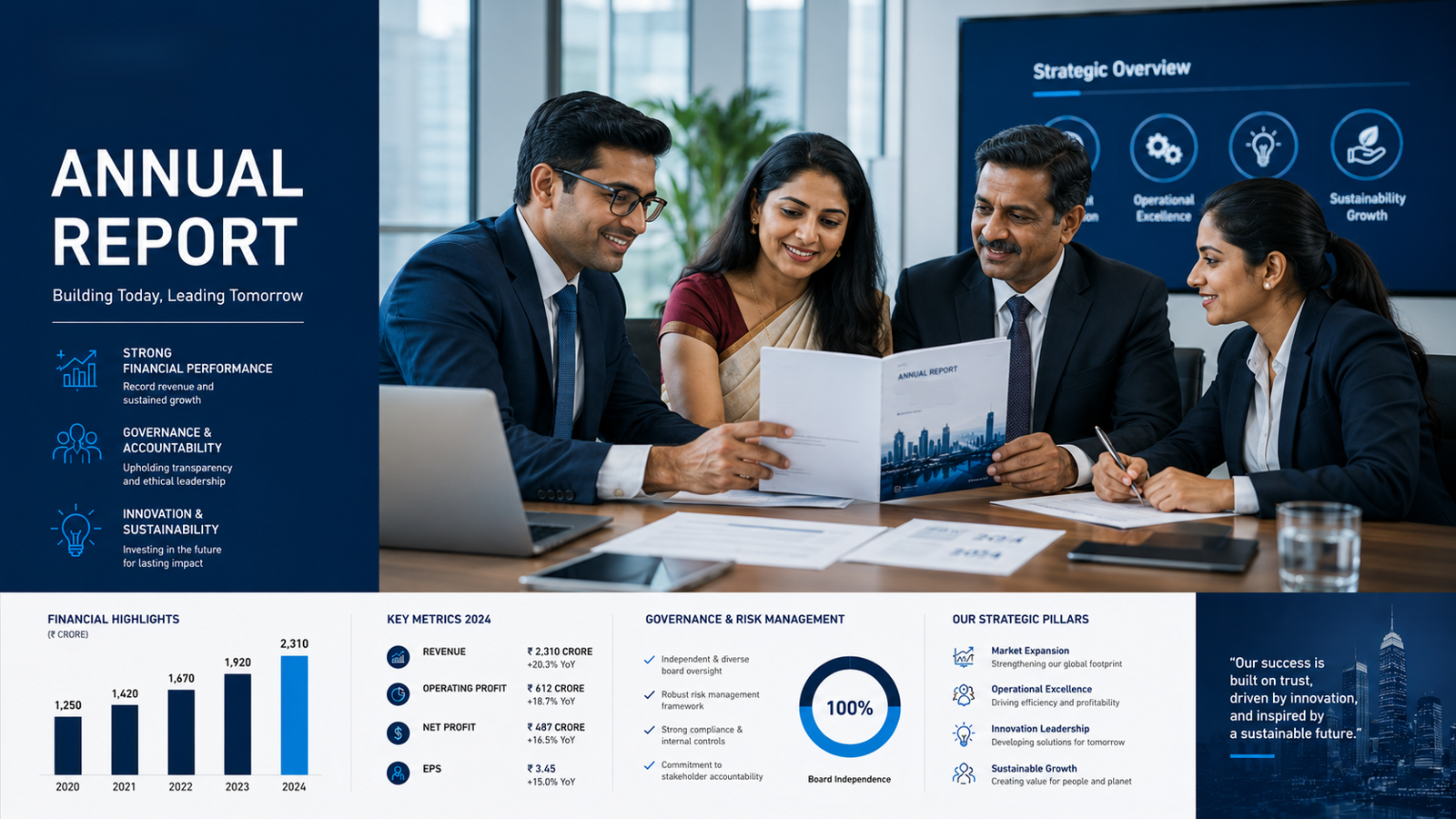
A single year's performance rarely tells you everything you need to know. Investors typically compare multiple years of financial data to identify patterns in growth, profitability, efficiency, and capital allocation.
Metrics such as Return on Equity (ROE), Earnings Per Share (EPS), and Debt-to-Equity Ratio become more meaningful when viewed over time.
Evaluate the Risks That Could Affect Future Performance
Every company faces risks, whether they come from competition, regulations, technology changes, supply chain disruptions, or economic conditions. The risk disclosure section helps you understand what could impact future earnings and business stability.
Rather than skipping this section, use it to assess whether management has identified key risks and developed practical strategies to manage them.
Assess Governance and Leadership Quality
Financial performance is only one part of the investment equation. You should also evaluate how the company is governed. Review information about the board of directors, audit practices, executive compensation, and compliance frameworks.
Bottom Line
If you want to read an annual report like an investor, your goal should be to understand the business behind the numbers. Financial statements, management commentary, risk disclosures, and governance information all contribute to a complete assessment of company performance.
The annual report of any company becomes more valuable when you use it to evaluate long-term business quality rather than focusing only on short-term financial results.
That approach allows you to make more informed decisions and develop a deeper understanding of how successful companies create value in the long run.



Write a comment ...